
3D printing is more than just a hobbyist tool; it's a revolutionary technology that is actively shaping the future. From the microscopic to the massive, here are some of the most incredible applications and achievements of 3D printing that are pushing the boundaries of what's possible.
Key Takeaways
- 3D printing is scaling up to build entire concrete houses and scaling down to print microscopic medical robots.
- Aerospace companies are 3D printing rocket engines to drastically reduce weight and part counts.
- Bioprinting is an emerging medical field aiming to print living human tissue and custom organs.
- The technology is revolutionizing diverse fields, from high fashion to personalized food.
| Industry | 3D Printing Application | Key Benefit |
|---|---|---|
| Construction | Lavacrete Houses & Habitats | Speed, reduced waste, unique architecture |
| Aerospace | Rocket Engines & Superalloys | Lightweight, part consolidation, extreme heat resistance |
| Medicine | Bioprinting (Organs/Tissue) | Customization, potential to eliminate donor waitlists |
| Automotive | F1 Aerodynamics & Calipers | Rapid prototyping, massive weight reduction |
Feats of Scale: The Biggest and Smallest Prints
Printing Entire Houses
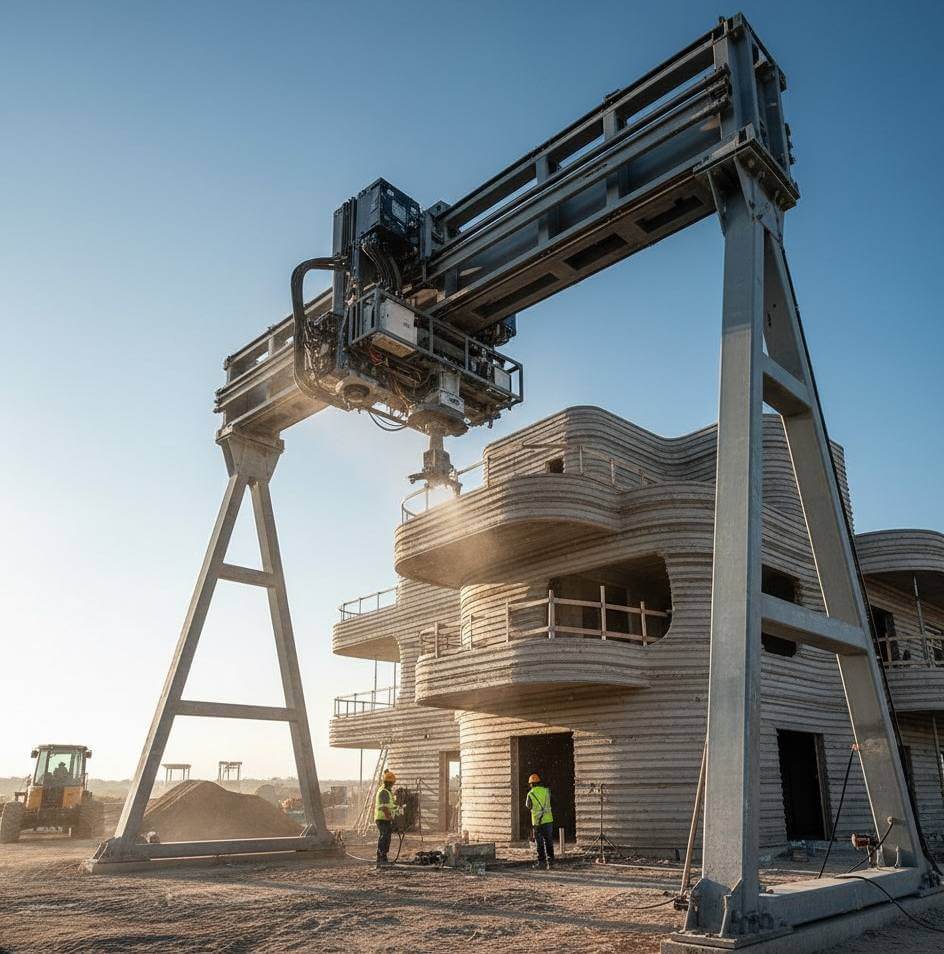
Companies like ICON are using massive, gantry-style 3D printers to print the entire wall system of a house out of a specialized concrete mixture called "Lavacrete." This method is significantly faster, produces far less waste than traditional construction, and allows for unique architectural designs like curved walls. Entire communities of 3D printed homes are now being built, showcasing this technology as a viable future for construction.
The Smallest 3D Print Ever
At the other end of the spectrum, researchers at Leiden University created a boat just 30 micrometers long—so small that you could fit two of them across the width of a single human hair. This was achieved using a technique called micro-printing and demonstrates the potential for creating microscopic robots that could one day perform medical procedures from inside the body.
Revolutionizing Industries
Printing Our Way to Space
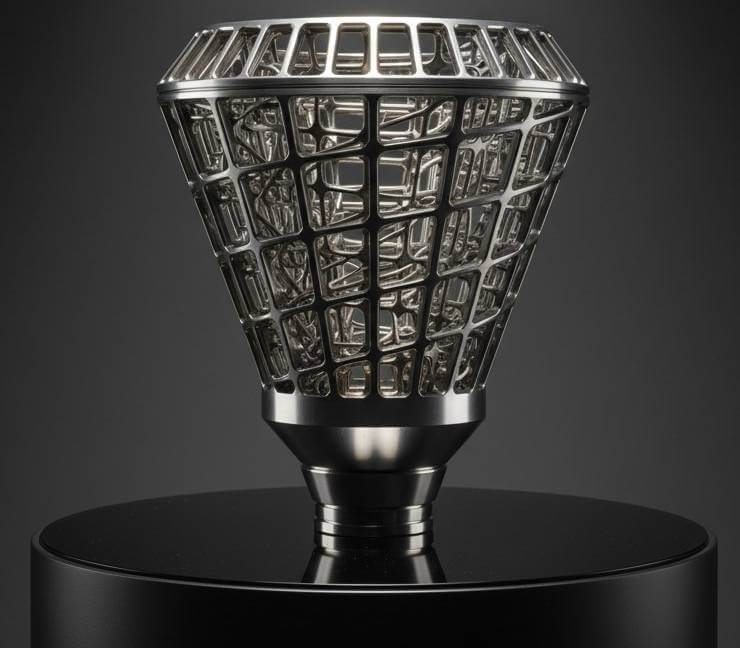
Space agencies like NASA and private companies like Relativity Space are heavily invested in 3D printing. They use it to create complex, lightweight rocket engine parts from high-performance superalloys. You can learn more about the core technology in our Guide to Metal 3D Printing. The goal is to drastically reduce the number of individual components, which lowers cost and increases reliability. In the future, the plan is to use 3D printing to create tools, spare parts, and even habitats on the Moon and Mars using local materials.
The Future of Medicine: Bioprinting
Scientists are now using a technique called "bioprinting," where they use a "bio-ink" made of living cells to print structures like skin, cartilage, and even miniature organs. While still in the experimental phase, this technology holds the promise of one day being able to print custom organs for transplant, eliminating the need for donors and the risk of rejection.
High-Performance Automotive
Formula 1 teams and supercar manufacturers like Bugatti use 3D printing extensively. They can design, print, and test a new aerodynamic part in a single day, a process that used to take weeks. They also print final-use parts, like Bugatti's titanium brake caliper, which is incredibly strong yet 40% lighter than the traditionally made version, improving the car's performance.
You don't need to print rockets to make money.
Thousands of people run profitable businesses printing everyday items from home. See how much you could be making.
Calculate Your Profit MarginCreative and Unexpected Applications
3D Printed Food
From intricate chocolate sculptures to custom-designed pasta, companies are using 3D printers that extrude edible ingredients. This allows chefs to create complex geometric designs that would be impossible by hand and offers a potential future for personalized nutrition, where meals could be printed with the precise vitamins and minerals a person needs.
High Fashion and Film
Fashion designers are using 3D printing to create stunning, avant-garde dresses and accessories with complex patterns that conform perfectly to a model's body. In Hollywood, prop masters use 3D printing to create detailed helmets, futuristic weapons, and creature models, allowing for rapid iteration and incredible detail.