
Choosing your first (or next) 3D printer is a big decision. The market is moving faster than ever, with new features becoming standard every year. This guide will walk you through the key features to look for in 2026 and recommend the best printers for every budget and skill level.
Key Takeaways
- FDM (Filament) remains the best and most versatile technology for 95% of users in 2026.
- Do not buy a printer without Auto-Bed Leveling and a Direct Drive Extruder.
- Bambu Lab and Creality currently dominate the market for speed, reliability, and value.
- If you plan to print advanced materials like ABS or ASA, an enclosed chamber is mandatory.
First, Confirm Your Technology: FDM vs. SLA
Before looking at models, be certain you're choosing the right technology for your goals. If you're not sure what these terms mean, our Complete Beginner's Guide is a great place to start.
- FDM (Fused Deposition Modeling): This is the technology we recommend for 95% of beginners and hobbyists. It works by melting spools of plastic filament and is perfect for functional parts, prototypes, and general-purpose printing. It's affordable, reliable, and versatile.
- SLA (Stereolithography): This technology uses a laser to cure liquid resin. It produces stunningly detailed and smooth parts, making it the top choice for miniatures, jewelry, and dental models. However, the workflow is messier and requires handling chemicals.
This guide will focus on FDM printers, as they are the standard for most users.
Key Features to Look For in 2026
These are the features that separate a modern, user-friendly printer from an older, more frustrating model.
- Auto-Bed Leveling: This is a non-negotiable, essential feature for beginners. It uses a sensor to automatically compensate for any slight tilt in the print bed, ensuring a perfect first layer every time.
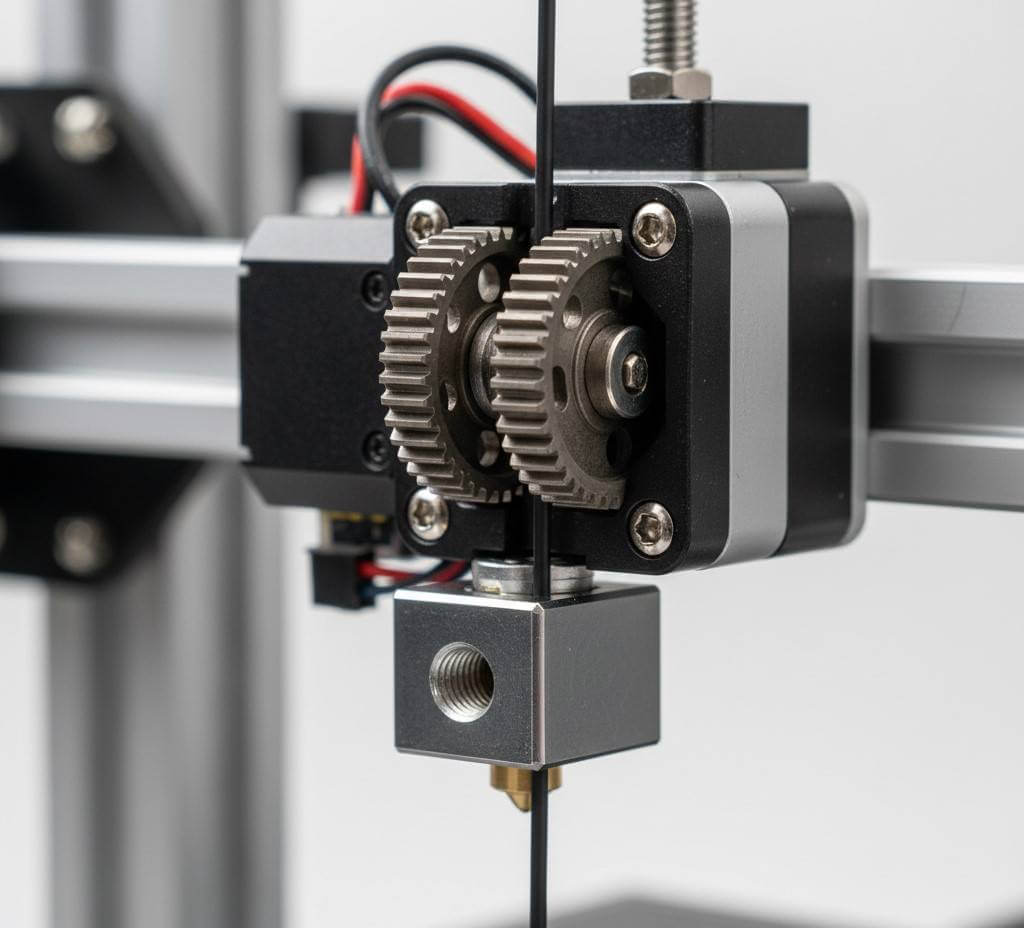
- Direct Drive Extruder: This means the motor that pushes the filament is mounted directly on the print head. This setup is more reliable and handles flexible filaments (like TPU) much better than older Bowden-style extruders.
- High Print Speed: Modern printers are much faster. Look for printers that can comfortably print at speeds of 150 mm/s or more. Some advanced models now reach speeds of 500 mm/s.
- PEI Magnetic Build Plate: This is the gold standard for print surfaces. It's a flexible, textured steel sheet that holds prints firmly when hot but allows you to easily pop them off by flexing the plate once it cools.
The 2026 Printer Recommendations
Here are our top picks, broken down by user category. If you are in a hurry, here is the quick summary:
| Category | Top Pick | Price Range | Standout Feature |
|---|---|---|---|
| Absolute Beginners | Bambu Lab A1 Mini | Under $400 | Multi-color ready & incredibly fast |
| Budget Workhorse | Creality Ender 3 V3 SE | Under $300 | Unbeatable value for the features |
| Enthusiasts | Bambu Lab P1S | $400 - $1,000 | Fully enclosed for advanced materials |
| Professionals | Prusa XL | $1,000+ | Up to 5 independent tool heads |
Best for Absolute Beginners (Under $400)
These printers are designed for ease of use and reliability, getting you from unboxing to printing as quickly as possible.
- Bambu Lab A1 Mini: A game-changer for beginners. It offers features previously found only on expensive machines, like multi-color printing capability, automatic calibration, and incredible speed right out of the box. Its smaller build volume is the main trade-off.
- Creality Ender 3 V3 SE: The latest evolution of a legendary budget printer. It now includes all the modern essentials like auto-bed leveling and a direct drive extruder, making it a reliable and affordable workhorse.
Best for Enthusiasts & Upgraders ($400 - $1,000)
These printers offer more speed, larger build volumes, and the ability to handle more advanced, high-temperature materials.
- Bambu Lab P1S: The P1S is arguably the best value in 3D printing today. It's incredibly fast, reliable, and comes with a fully enclosed chamber. The enclosure helps maintain stable temperatures, which is essential for printing materials like ABS and ASA without warping.
- Qidi Tech Plus 3: A powerful competitor known for its sturdy construction and actively heated chamber, which provides an even better environment for engineering-grade filaments. It's a robust machine for those who want to print functional, high-strength parts.
Best for Professionals & Small Business ($1,000+)
When reliability, precision, and minimal downtime are the top priorities, these machines deliver.
- Bambu Lab X1 Carbon: The flagship model that shook up the industry. It combines blistering speed with advanced features like a LiDAR sensor for perfect first layers and the ability to print with carbon fiber-reinforced materials for exceptionally strong, lightweight parts.
- Prusa XL: A massive, multi-tool head printer from one of the most respected brands in the industry. Its key feature is the ability to automatically switch between up to five different tool heads, allowing it to print with five different materials in a single print seamlessly. It's a powerhouse for complex, multi-material prototyping.
Ready to start a 3D printing side hustle?
Once you buy your printer, use our tool to calculate exactly how much to charge for your prints to guarantee a profit.
Calculate Your Profit MarginA Final Word of Advice
The best printer is the one that fits your specific goals and budget. For most beginners in 2026, a printer with auto-bed leveling and a direct drive extruder will provide the best and most reliable experience. Don't be afraid to start with a budget-friendly model; the skills you learn on an entry-level machine will be invaluable as you grow in the hobby.